
Get more details about this project
What you need
2 tablespoons dried sage leaves
340 g / 12 oz grated soap, soap flakes, or melt and pour soap base
250 g / 9 oz water
Optional soap-safe green dye or natural colourant
Heatproof jug or bowl
Microwave or double boiler
Soap mold or silicone mold
Spoon or spatula
If you plan to make soap regularly, a silicone soap mold, digital kitchen scale, and good quality melt and pour soap base are handy supplies to keep in your bath and body craft stash. You can usually find beginner soapmaking supplies, dried herbs, and soap-safe colourants through Amazon or your favourite soapmaking supplier.
Instructions
This soap recipes uses the Melt & Pour Method of soap making.
Add 250 g of water or 9 ounces of water to the Melt and Pour Soap base
Melt the liquid together with the soap flakes and then add the sage and optional dye and pour into molds.
Sage soap has that lovely old-fashioned herbal feel — the sort of soap that looks like it belongs beside a linen towel, a little wooden nail brush, and possibly a window box full of herbs you absolutely intended to water regularly.
This easy sage soap recipe uses the melt and pour method of soap making, which makes it a great project for beginners. You do not need to work with lye, and the process is simple enough for a quick handmade bath and body project. The dried sage leaves give the soap a natural herbal look, while the soap base creates a mild cleansing bar that feels fresh and practical.
Sage has long been used in traditional herbal care, and in this soap it adds a beautiful earthy scent and a soft botanical finish. This is a lovely handmade soap for guest bathrooms, garden-themed gifts, market stalls, teacher gifts, or anyone who enjoys simple natural-style soap recipes.
To make this sage soap, begin by chopping or grating your soap base into small pieces. Smaller pieces melt more evenly and help prevent hot spots.
Place the soap base into a heatproof jug or bowl. Add the water and melt gently using a double boiler or short bursts in the microwave, stirring slowly between each burst.
Once the soap has melted, stir in the dried sage leaves. Mix gently so the sage is evenly distributed through the soap.
If you would like to add colour, stir in a small amount of soap-safe green dye or natural soap colourant. Start lightly — sage soap looks best with a soft herbal green rather than a colour that screams “science experiment from the back of the fridge.”
Pour the mixture into soap molds and tap the molds gently on the bench to release any trapped air bubbles.
Allow the soap to set completely. This may take several hours depending on your mold size and room temperature.
Once firm, remove the soap from the molds. If the bars feel soft, leave them uncovered in a cool, dry place for a day or two before wrapping.
Use dried sage rather than fresh sage. Fresh herbs contain moisture and can spoil or discolour more quickly in handmade soap.
Crush the dried sage slightly before adding it if you want a finer speckled look. Leave it a little larger if you prefer a more rustic herbal soap.
Do not add too much sage. A little gives a pretty botanical look, but too much can make the soap feel scratchy.
Use a white or goat’s milk melt and pour soap base for a creamy herbal soap. A clear glycerin base will show the sage leaves more clearly.
If you are adding fragrance, choose something that works with the herbal theme. Lavender, rosemary, tea tree, eucalyptus, lemon, or a soft herbal blend would all suit this recipe.
Always use soap-safe dye or colourant. Food colouring can bleed, fade, or stain, and it does not always behave nicely in soap.
For a sage and lavender soap, add a small pinch of dried lavender buds along with the sage.
For a garden herb soap, combine dried sage with a little rosemary or thyme.
For a creamy sage soap, use a goat’s milk melt and pour base.
For a clearer botanical bar, use a clear glycerin base and press a few sage leaves into the top of the soap before it sets.
For a stronger herbal scent, add a soap-safe fragrance oil or essential oil blend that suits bath and body products.
Use sage soap as a regular cleansing bar. Lather with warm water, wash gently, and rinse well.
Avoid using the bar on broken, irritated, or very sensitive skin. If you are prone to skin reactions, do a small patch test first.
Because this recipe includes dried botanicals, allow the soap to dry between uses. A draining soap dish will help the bar last longer.
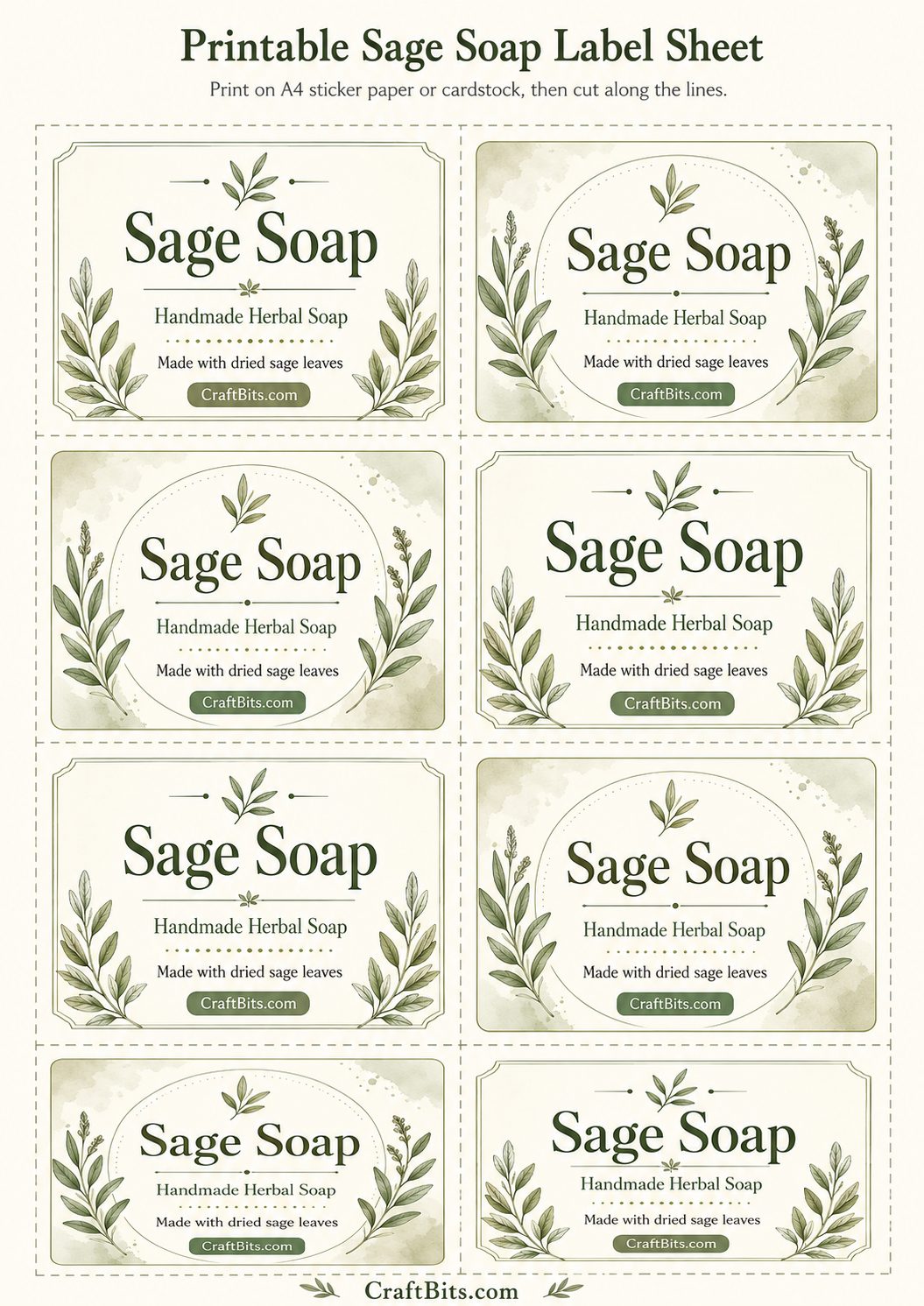
Sage soap makes a lovely handmade gift, especially if you like natural, herb-garden-style bath and body projects. Wrap each bar in kraft paper, parchment, or a simple paper soap band and tie it with twine.
For a pretty herbal gift bundle, pair the soap with a handmade washcloth, a small wooden soap dish, and a packet of herb seeds. It has that charming “I casually live in a cottage garden” look, even if your actual herb garden is three sad pots and a dream.





What do you think of this project? Let us know!