
Get more details about this project
What you need
Calico
21 Buttons
Sewing threads
Toy Filling
Instructions
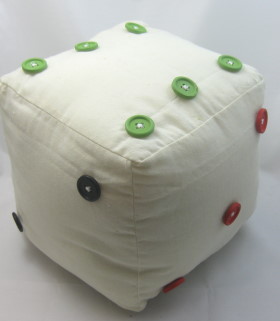
This giant button play dice is such a fun sewing project for kids, classrooms, therapy activities, and playrooms. It is soft, oversized, easy for little hands to grab, and the buttons add a lovely tactile element that makes it more interesting than an ordinary fabric cube. I do love a project that looks simple at first glance but quietly ticks all the boxes for learning, sensory play, and “please keep the kids busy for five minutes while I drink my tea.”
The original version is made from six fabric squares, toy filling, sewing thread, and 21 buttons to create the classic dice dots. It is a great beginner-friendly sewing project because the construction is nice and straightforward: cut your squares, sew them into a cube, stuff firmly, close the opening, and then stitch the buttons in place. You can keep it neutral with calico, make each side a different colour, or use bright scraps from your fabric stash for a more playful look.
This handmade giant dice is perfect for counting games, movement games, classroom activities, early maths practice, sensory play, and therapy-based activities where children benefit from soft, tactile toys. You could even add a small rattle inside with the toy filling for extra sensory interest, or use large felt circles instead of buttons if the dice will be used by very young children.
Making The Giant Dice Washable Or Better For Yard Games
If you want to use this giant button play dice outside for yard games, picnics, birthday parties, or preschool play, it is worth making a few small changes so it can handle grass, dirt, sticky fingers, and the occasional mystery spill. Because honestly, if children are involved, something is going to end up muddy.
For a washable version, use a sturdy cotton drill, canvas, outdoor fabric, or upholstery-weight cotton instead of plain calico. Pre-wash the fabric before sewing so it does not shrink later. If you want the dice to be fully machine washable, replace the buttons with felt circles, appliquéd fabric circles, or securely sewn-on fabric dots. Buttons look wonderful, but they can catch, loosen, or become a choking hazard if the dice is used roughly or by younger children.
For yard games, consider making a removable outer cover. Sew the dice as usual, but create an envelope-style or zipper cover that slips over the stuffed cube. That way, the inner cushion stays protected and the outer cover can be removed and washed when needed. A hidden zipper, hook-and-loop closure, or overlap flap works well. Just keep closures tucked away so they do not scratch little hands during play.
If you want the dice to be more water-resistant, choose outdoor canvas or wipe-clean fabric and use polyester thread. You can also lightly spray the finished outer cover with a fabric protector suitable for the material you are using. This will not make it fully waterproof, but it can help repel light moisture from damp grass. For proper outdoor play, avoid leaving the dice outside overnight, and let it dry completely before storing it away.
For extra durability, double-stitch the seams and reinforce the corners, as these are the areas that take the most strain when the dice is tossed around. You can also slightly under-stuff it if children will be throwing it during games, as a softer dice lands more gently and is less likely to burst a seam. Think soft playroom cube, not competitive backyard cricket ball.
This washable outdoor version would be brilliant for garden parties, school sports days, therapy groups, summer camp games, and family BBQs. Make a few in different colours and you have a simple handmade yard game that can be used for number recognition, movement prompts, team games, or silly action challenges.
Step 1: Cut six squares 8 inches x 8 inches (20 cm x 20 cm).
Step 2: Sew the four side pieces together and then the top piece .
Step 3: Sew the bottom piece but leave a gap for filling. Hand sew the gap closed once filled.
Step 4: You will need to collect your buttons and decide which ones you will use and where. Then sew them into place.
Optional: You could use felt if you think small children may be playing with it.
Optional: You could make each square a different color, and even put a bird rattle inside with the filling



cool idea