
Get more details about this project
What you need
This recipe makes approximately 30 g of solid perfume, enough for two or three small perfume tins or twist-up tubes.
Solid Perfume Formula
18.9 g jojoba oil — 63%
7.5 g cosmetic-grade beeswax — 25%
3 g refined cocoa butter — 10%
0.6 g skin-safe fragrance oil — 2%
Equipment
Digital scale accurate to 0.1 g
Small heat-safe measuring jug
Small saucepan
Silicone spatula or stirring stick
Thermometer
Disposable pipette
Mini cosmetic tins, balm tubes or small silicone moulds
Gloves
Isopropyl alcohol for sanitising
Waterproof labels
Small aluminium tins, cardboard balm tubes and mini twist-up containers are easy to find through Amazon. Choose packaging made for cosmetics rather than repurposing containers that may have absorbed food, paint or mystery craft-cupboard substances.
Instructions
Perfume is becoming less about spraying a large cloud into the room and more about creating a small personal ritual.
Solid perfume fits beautifully into that slower style of body care. Rather than using an alcohol-based spray, fragrance is blended into oils, butter and wax. The finished balm melts slightly against warm skin and leaves a subtle scent on pulse points.
It is portable, discreet and far less likely to leak through the bottom of a handbag.
Solid perfume also suits the broader interest in body-care products that feel as considered as facial skincare. Current beauty trends are moving beyond basic moisturising towards tactile balms, layered scents and products that combine function with a pleasurable sensory experience.
CraftBits has shared an older solid perfume pot recipe and a nostalgic strawberry perfume project. This updated solid perfume bar recipe uses a much smaller weighed formula, modern fragrance guidance and firmer packaging options such as sticks and moulded bars.
What Is Solid Perfume?
Solid perfume is a scented balm made without alcohol or added water.
The base normally contains:
- A liquid carrier oil
- Wax
- A small amount of butter
- Skin-safe fragrance
The wax gives the perfume structure, while the carrier oil allows it to glide over the skin. The fragrance warms gradually after application and generally stays closer to the body than a spray perfume.
Solid perfume can be poured into:
- Small cosmetic tins
- Slider tins
- Twist-up balm tubes
- Cardboard push-up tubes
- Vintage-style cosmetic pots
- Small silicone moulds
Moulded perfume bars should be stored inside a clean tin after they are removed from the mould.
Why Make Solid Perfume Bars?
DIY solid perfume bars are:
- Compact and travel-friendly
- Alcohol-free
- Easy to apply discreetly
- Simple to personalise
- Suitable for small handmade gifts
- Less likely to spill than liquid perfume
- Easy to make in small test batches
- Ideal for layering with matching body products
They are also a lovely way to use fragrance as a deliberate part of a morning or evening routine.
Applying a little balm to the wrists feels far more intentional than accidentally spraying perfume into one eye while rushing out the door.
Understanding the Ingredients
Jojoba Oil
Jojoba oil has a light texture and good oxidative stability.
Although it is commonly described as an oil, jojoba is technically a liquid wax. It creates a smooth balm without feeling as heavy as some richer vegetable oils.
You can substitute fractionated coconut oil, although the finished perfume may feel slightly different on the skin.
Sweet almond or apricot kernel oil may also be used, but they can oxidise more quickly. Anyone with a nut allergy should avoid sweet almond oil.
Beeswax
Beeswax gives the perfume bar firmness and helps it remain solid inside a tin or tube.
Use cosmetic-grade beeswax pellets for easier measuring and melting.
Beeswax cannot be replaced directly with the same quantity of every other wax. Plant waxes such as candelilla are generally harder and require recipe adjustments.
Refined Cocoa Butter
Cocoa butter adds firmness while improving glide.
Use refined cocoa butter when you do not want the natural chocolate scent interfering with the fragrance blend.
Mango butter can be substituted for a slightly softer, less occlusive feel.
Fragrance Oil
Use only a fragrance oil approved for leave-on cosmetic products.
A fragrance sold for candles, room sprays or diffusers is not automatically suitable for skin.
Check the supplier’s current IFRA documentation and confirm the maximum permitted amount for the exact fragrance and intended product type.
This recipe begins with a cautious fragrance level of 2%. Some fragrance oils must be used at a lower concentration.
Do not exceed the supplier’s limit in an attempt to make the perfume stronger.
Why This Recipe Is Weighed
Small perfume batches should be measured with a digital scale rather than teaspoons or drops.
Wax, oil and fragrance have different densities, and “20 drops” can vary considerably depending on the pipette and viscosity of the liquid.
Weighing the ingredients helps produce a consistent texture and keeps the fragrance concentration accurate.
The formula percentages add up to 100%, making it easy to resize.
For a 15 g test batch, divide every measurement in half.
Instructions
Step 1: Prepare the Containers
Wash reusable containers with hot, soapy water and allow them to dry completely.
Sanitise the work surface, utensils and containers with isopropyl alcohol. Allow the alcohol to evaporate before beginning.
Arrange the open containers on a level tray.
Have everything ready before melting the ingredients because the perfume mixture will begin setting fairly quickly once removed from the heat.
Step 2: Weigh the Base Ingredients
Place the empty heat-safe jug on the digital scale and reset it to zero.
Weigh the following ingredients into the jug:
- Jojoba oil
- Beeswax
- Refined cocoa butter
Keep the fragrance aside until the base has melted and cooled slightly.
Step 3: Create a Water Bath
Add several centimetres of water to a small saucepan.
Place the heat-safe jug inside the saucepan, making sure no water can splash into the ingredients.
Heat gently.
Stir occasionally until the beeswax and cocoa butter have melted completely.
The mixture should look clear and contain no visible wax pellets or solid butter.
Step 4: Remove the Mixture From the Heat
Carefully lift the jug from the water bath.
Dry the outside of the jug so no water drips into the perfume base.
Stir gently and allow the mixture to cool slightly.
Avoid adding fragrance while the mixture is extremely hot because heat may cause some delicate fragrance components to evaporate.
Follow any temperature advice supplied by the fragrance manufacturer.
Step 5: Add the Fragrance
Weigh 0.6 g of approved leave-on fragrance oil using a pipette.
Add it to the melted base and stir thoroughly for at least one minute.
Scrape the sides and bottom of the jug so the fragrance is distributed evenly.
Do not add extra fragrance simply because the warm mixture smells faint. The finished scent often becomes more noticeable after the balm cools and rests.
Step 6: Pour the Perfume
Carefully pour the liquid perfume into the prepared tins, tubes or moulds.
Leave a little space at the top of twist-up containers.
Work steadily, as the beeswax mixture may begin setting around the edge of the jug.
When pouring into small silicone moulds, place the mould on a rigid tray first. This makes it easier to move without bending and spilling the mixture.
Step 7: Allow the Bars to Set
Leave the perfume undisturbed at room temperature until completely firm.
This normally takes one to two hours.
Do not put lids onto warm containers because condensation may collect inside.
Once the perfume is cool, replace the lids and allow the fragrance to rest for at least 24–48 hours before assessing the final scent.
Step 8: Unmould Solid Perfume Bars
When using silicone moulds, gently flex the mould and lift out each bar.
Handle them carefully because small wax bars can crack if the formula is too firm.
Store each bar in a clean tin or small lidded container to keep it free from dust and lint.
How to Use Solid Perfume
Rub a clean fingertip over the surface of the perfume and apply a small amount to the pulse points.
Suitable areas include:
- Wrists
- Inner elbows
- Behind the ears
- Base of the throat
A perfume stick can be glided lightly over the skin.
Do not apply solid perfume to the eyes, lips, broken skin or irritated areas.
Patch-test the finished product before regular use. Stop using it if redness, burning or irritation occurs.
Solid perfume normally creates a soft, close-to-the-skin fragrance rather than the stronger projection of an alcohol-based spray. Reapply during the day when needed.
Four Solid Perfume Scent Ideas
The following are fragrance themes rather than unrestricted essential-oil recipes.
The complete fragrance portion must remain within the permitted usage level for every ingredient in the blend.
Soft Vanilla Woods
Combine a skin-safe vanilla fragrance with sandalwood or soft amber fragrance.
This creates a warm, comforting perfume that works particularly well in autumn and winter.
Fresh Lavender Linen
Use a leave-on lavender fragrance with soft cotton, linen or white musk notes.
This is a good choice for a quiet evening perfume or handmade relaxation gift.
Rose Garden
Combine a rose fragrance with a small amount of geranium or soft woody fragrance.
Rose can quickly take over a blend, so begin with a small test batch before filling several gift tins.
Green Garden Perfume
Try tomato leaf, basil, cucumber or green tea fragrance notes for a fresher alternative to traditional sweet perfume.
Green and botanical fragrance notes have become increasingly visible in modern fragrance collections, and they work beautifully in a simple pocket balm.
Can You Use Essential Oils?
Essential oils can be used only when the individual oils are appropriate for a leave-on skin product and are diluted within their safe dermal limits.
Some essential oils can cause:
- Skin irritation
- Sensitisation
- Phototoxic reactions
- Reactions during pregnancy or with particular medical conditions
Expressed citrus oils may increase sensitivity to sunlight. Some oils also have very low permitted leave-on concentrations.
“Natural” does not automatically mean gentle or safe.
For beginners, a cosmetic fragrance oil supplied with clear leave-on usage information may be easier to formulate accurately.
How to Make Vegan Solid Perfume Bars
Replace the beeswax with a cosmetic plant wax such as candelilla wax.
Candelilla wax is significantly harder than beeswax, so do not substitute it gram for gram.
For a small vegan test batch, try:
- 21 g jojoba oil
- 5.4 g candelilla wax
- 3 g refined cocoa butter
- 0.6 g approved fragrance oil
This produces a starting formula containing:
- 70% jojoba oil
- 18% candelilla wax
- 10% cocoa butter
- 2% fragrance
Plant waxes vary between suppliers, so make a small batch and adjust the next formula if necessary.
How to Adjust the Texture
Allow the perfume to rest for a full day before deciding whether it is too soft or too hard.
If the Perfume Is Too Soft
Increase the beeswax by 1–2% in the next batch and reduce the jojoba oil by the same amount.
A slightly firmer formula is usually better for twist-up tubes and hot climates.
If the Perfume Is Too Hard
Reduce the beeswax by 1–2% and replace it with jojoba oil.
A softer formula is easier to apply from a tin but may not hold up well as a freestanding bar.
If the Perfume Drags Across the Skin
The formula may contain too much wax.
Reduce the beeswax slightly or add a little more jojoba oil in the next test batch.
If the Perfume Melts in Warm Weather
Increase the beeswax slightly and store the perfume away from direct sunlight.
Do not leave a solid perfume inside a hot car. At that point, it will become liquid perfume with a lid and a very bad attitude.
Troubleshooting Solid Perfume
Why Is My Perfume Grainy?
Cocoa butter can develop a grainy texture after slow cooling or repeated temperature changes.
Make sure the butter is completely melted, pour the perfume promptly and allow it to cool undisturbed.
Why Is There a Dip in the Centre?
Wax contracts slightly as it cools.
Reserve a small amount of melted mixture and top up the container once the first layer begins setting.
Why Is the Fragrance Too Weak?
Allow the perfume to rest for several days before judging it.
Solid perfume remains closer to the skin than spray perfume, so it will naturally smell more subtle.
Do not exceed the fragrance supplier’s safe limit.
Instead, choose a fragrance designed to perform well in oil-and-wax formulations.
Why Does the Perfume Smell Different After Melting?
Wax, oils and cocoa butter can change the way a fragrance develops.
Test small batches before making multiple gifts.
A scent that smells beautiful in the bottle can take on a very different personality after moving in with beeswax.
Why Did the Perfume Separate?
The ingredients may not have been stirred thoroughly, or the fragrance may not be compatible with the base.
Stir well before pouring and check that the fragrance is suitable for oil-based cosmetic products.
Packaging Ideas
Solid perfume bars make lovely:
- Mother’s Day gifts
- Bridesmaid favours
- Stocking fillers
- Travel gifts
- Teacher gifts
- Self-care hamper additions
- Craft-market products
Try packaging them in:
- Small aluminium tins
- Sliding mint-style tins
- Cardboard push-up tubes
- Twist-up balm sticks
- Vintage-inspired cosmetic pots
- Lockets designed to hold solid perfume
You can find specialist perfume lockets and decorative empty tins through Etsy, although check their size and construction carefully before using them for a cosmetic product.
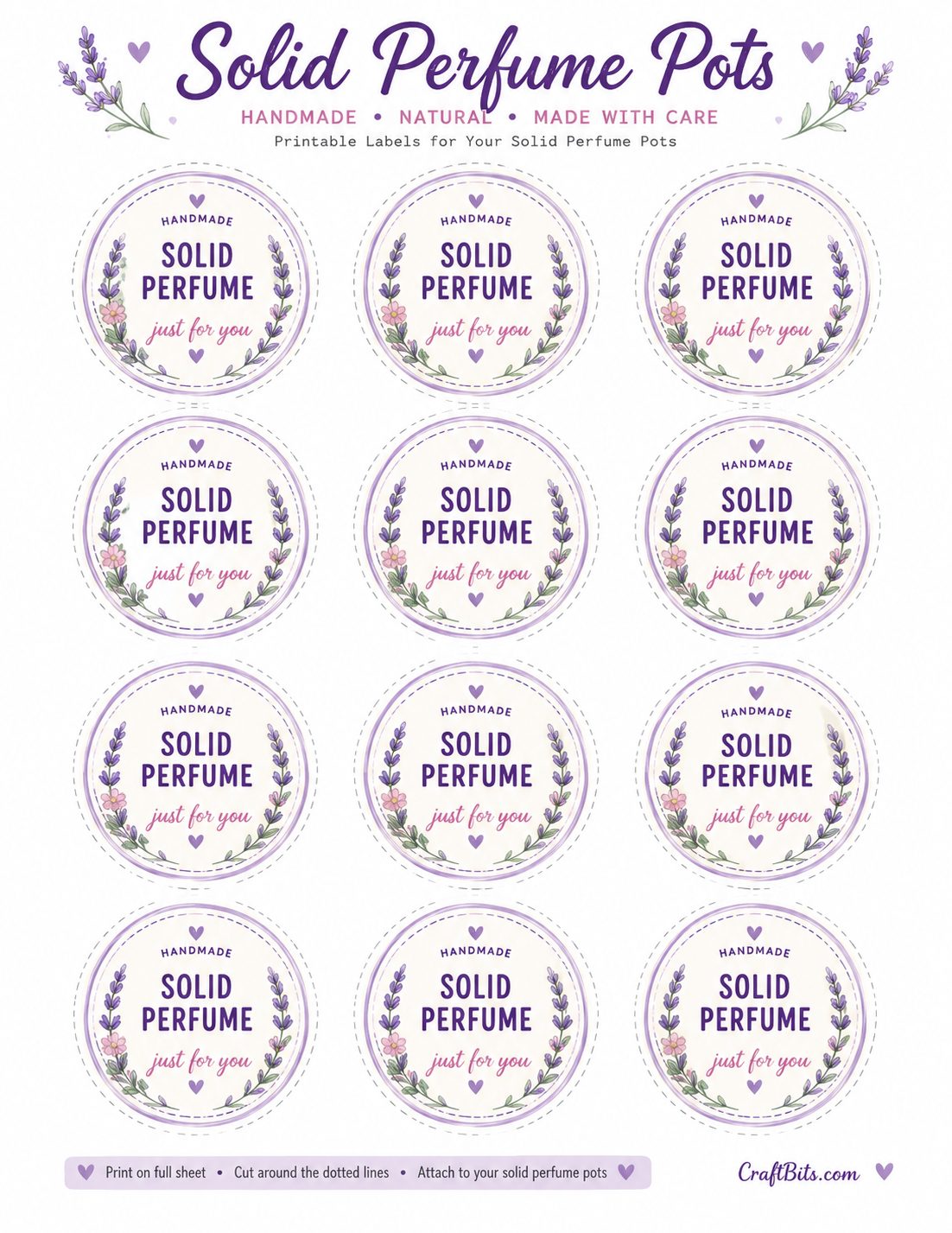
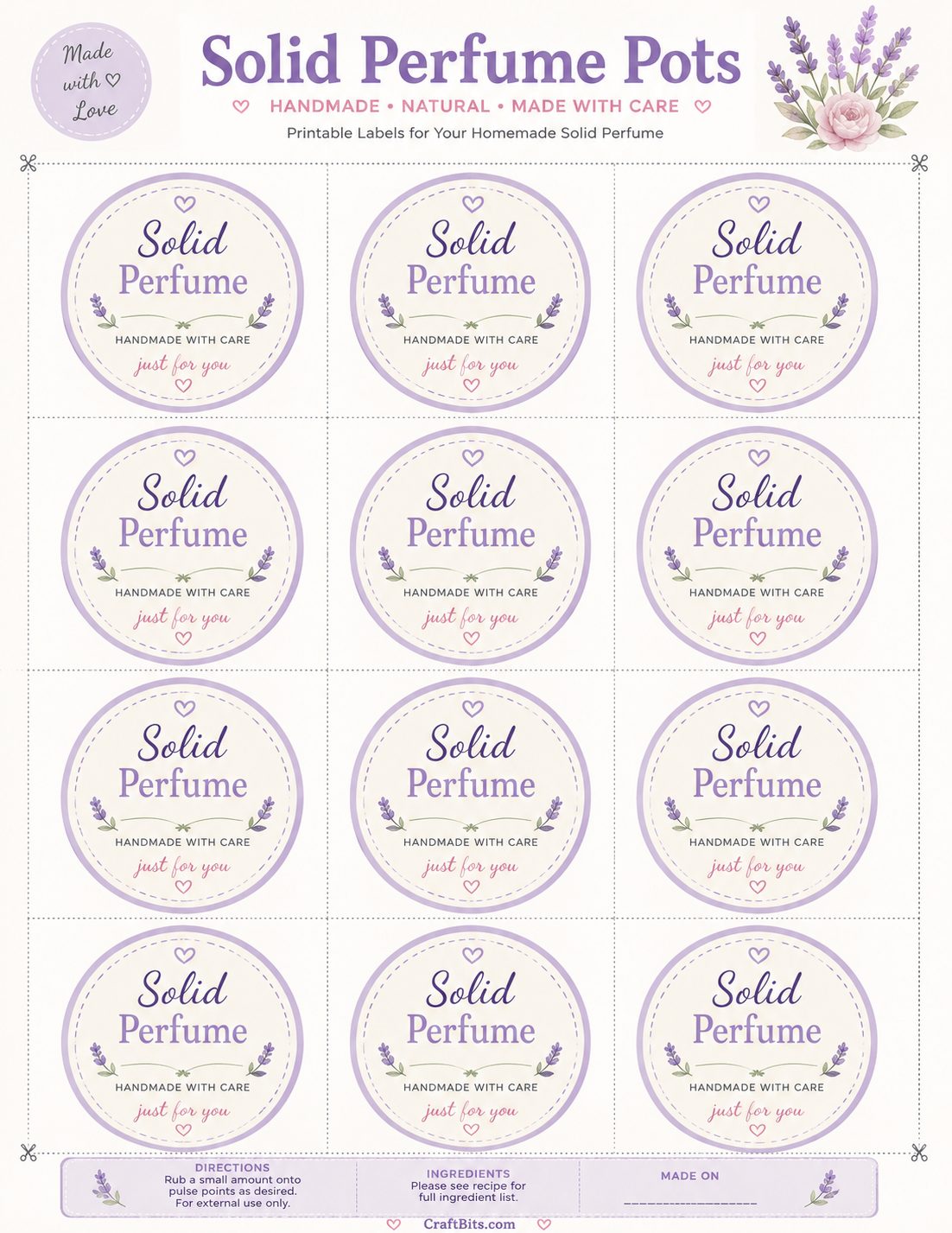
Add a waterproof label that includes:
- Product name
- Full ingredient list
- Fragrance name
- Date made
- Basic directions
- Appropriate warnings
Storage and Shelf Life
Store solid perfume in a cool, dry place away from direct sunlight and heat.
Keep the container closed between uses and apply it with clean fingers.
Because the recipe contains no water, it does not require the same preservation system as a water-based lotion. Clean preparation is still important, and the product should be discarded if it develops an unusual smell, colour or texture.
Vitamin E can be added as an antioxidant to help slow oil oxidation, but it is not a preservative.
The realistic shelf life depends on the freshness and stability of the ingredients used.
Can You Sell Handmade Solid Perfume?
A home recipe should not automatically be treated as a commercially tested formula.
Anyone selling handmade perfume should investigate the requirements that apply in their location, including:
- Cosmetic ingredient labelling
- Fragrance documentation
- Product liability insurance
- Batch records
- Stability testing
- Allergen declarations
- Good manufacturing procedures
- Business and cosmetic regulations
Avoid claiming that a fragrance treats stress, anxiety, insomnia or another health condition.
You can describe its scent and sensory qualities without making medical claims.
Solid perfume bars are simple enough for beginners but still feel like a beautifully considered body-care product.
They are portable, customisable and easy to work into a quiet daily ritual. Best of all, they stay safely inside their little tins instead of coating the contents of your handbag in something expensive and floral.




What do you think of this project? Let us know!