
Get more details about this project
What you need
Clear glass plate
Printed cotton fabric
Mod Podge or another decoupage medium
Foam brush or wide paintbrush
Fabric scissors
Small detail brush
Plastic card, brayer or your fingers for smoothing
Wax paper or a protected work surface
Clear acrylic sealer, optional
Instructions
Instructions
Step 1: Clean the plate
Wash the glass plate to remove dust, grease and price-label residue. Dry it thoroughly.
Wipe the back of the plate with rubbing alcohol if necessary. A clean surface will help the Mod Podge adhere properly.
Step 2: Cut the fabric
Place the plate face down on the wrong side of your fabric.
Cut a circle of fabric approximately 1/2 inch or 1–2 cm larger than the plate. The extra fabric will make positioning easier and can be trimmed after the first layer has dried.
Iron the fabric first if it has any deep creases or wrinkles.
Step 3: Apply the Mod Podge
Turn the plate upside down so you are working on the back.
Using a foam brush or wide paintbrush, apply an even layer of Mod Podge over the entire back of the plate. Take the adhesive all the way to the outer edge, but avoid leaving thick puddles.
Step 4: Position the fabric
Place the fabric right side down onto the coated back of the plate. The printed side should be facing the glass so the design can be seen correctly through the front.
Begin pressing the fabric down in the centre of the plate. Gradually work outward toward the edges.
Use your fingers, a brayer or the edge of a plastic card to gently smooth away wrinkles and trapped air bubbles. Take extra care around the curved rim of the plate.
If the fabric starts to shift, lift it carefully and reposition it before the Mod Podge begins to dry.
Step 5: Seal the fabric
Apply another generous but even layer of Mod Podge over the back of the fabric.
Make sure the fabric is completely saturated and firmly attached around the outer edge. Use a small detail brush to press down any loose areas.
The Mod Podge may look milky when first applied, but it will become clear as it dries.
Place the plate upside down on a protected surface and allow it to dry completely.
Step 6: Trim the edges
Once the first layer is completely dry, use sharp fabric scissors to carefully trim the excess fabric around the edge of the plate.
Trim as close to the glass as possible without pulling or lifting the fabric.
Apply a little more Mod Podge around the freshly cut edge. This seals the fabric and helps prevent fraying or lifting.
Step 7: Add a second protective coat
Apply a second coat of Mod Podge over the entire back of the fabric.
Pay particular attention to the edges and any areas that appear dry. Allow the plate to dry thoroughly according to the directions on the product.
For extra durability, apply an additional coat of Mod Podge or a compatible clear acrylic sealer to the back.
Step 8: Display your plate
Once completely dry, place the decorative plate on a small plate stand, shelf or mantel.
You can use this same technique to create coordinated plates for Halloween, Christmas, Easter, birthdays or other seasonal displays.
Important Care Information
This project is intended for decorative use only unless every product used is specifically labelled food-safe.
Do not place the plate in a dishwasher or submerge it in water. Clean the front gently with a slightly damp cloth, taking care to keep the fabric-covered back dry.
Avoid using the plate for hot, wet or oily foods, as moisture may reach the decoupaged edges and loosen the fabric.
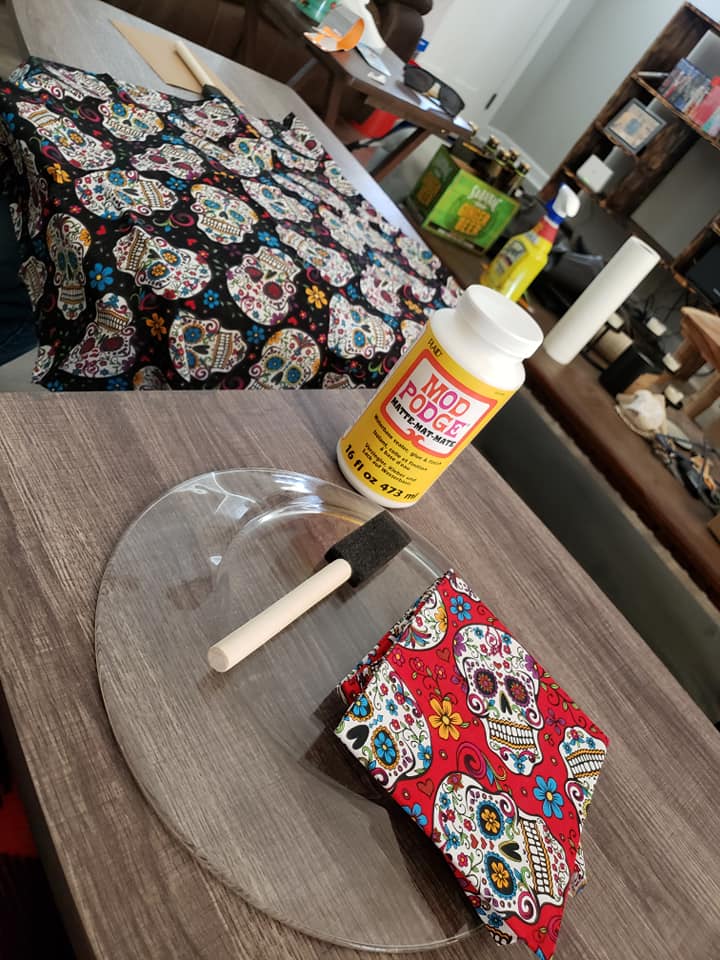
First thing you need to do it cut the fabric to fit the plate, allow 1/5 inch overlap to make working with it easier.
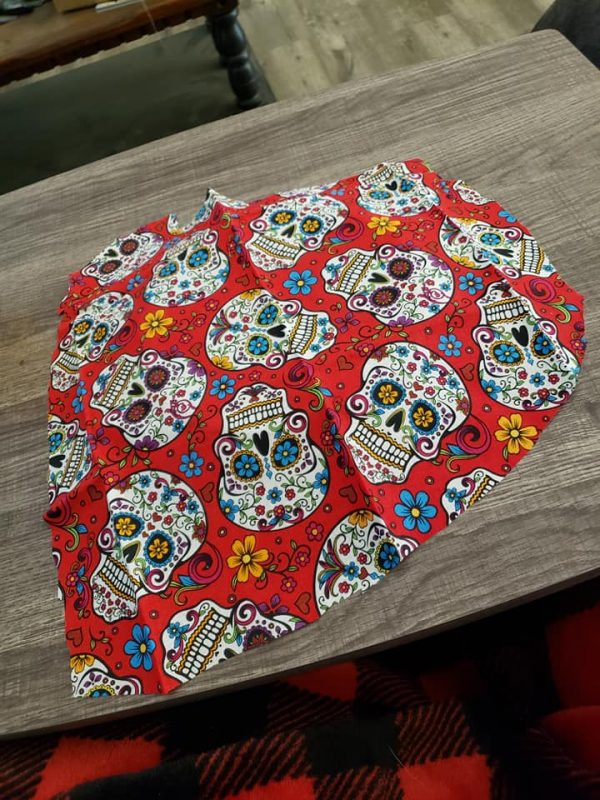
You can purchase the plates here for $1
Coat the back of your plate with modge podge. Now I am not a big fan of modge podge as it can be very expensive. Did you know you can make your own modge podge? It’s PVA or white wood glue, with some water to form a spreadable mix. It works out much cheaper and is also a creat paint sealer on projects.
Lay the fabric onto the plate and smooth it down, if you have done decoupage before then you will know to start by applying pressure in the middle and working out towards the edges. This helps the air bubbles to escape out of your Decorative plate design to avoid bumps and ripples.
Trim the edges of the fabric, I find this easiest to do when you allow the first layer to dry. Then trim, then reapply the glue to those cut edges. make sure you get all the edges as this will help ensure the fabric doesn’t begin to lift and will give your project longer. Allow to dry and re-apply a second coat for durability.
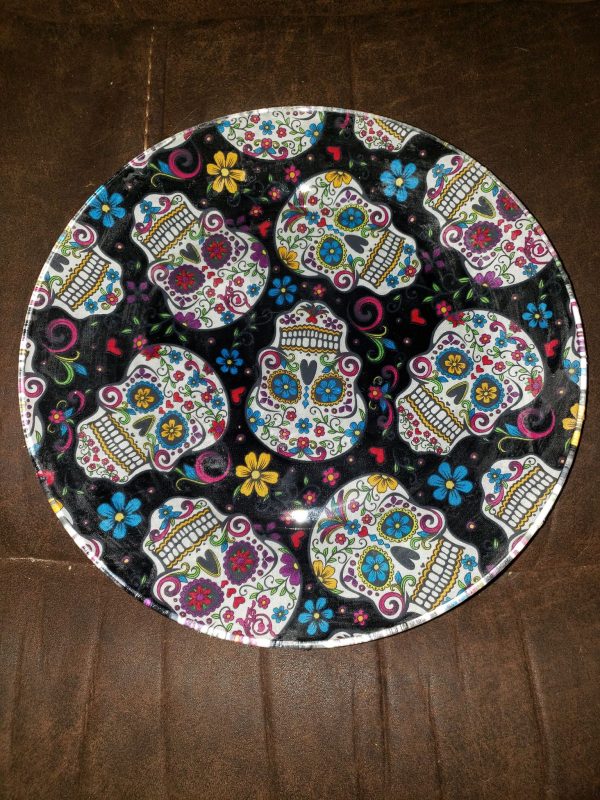
To clean your plate use a damp cloth do not submerge into water.
These images were contributed by Kate and Nick C. We saw their project and knew we had to feature it. Well done guys it looks amazing, thank you so much for sharing with us.




What do you think of this project? Let us know!