
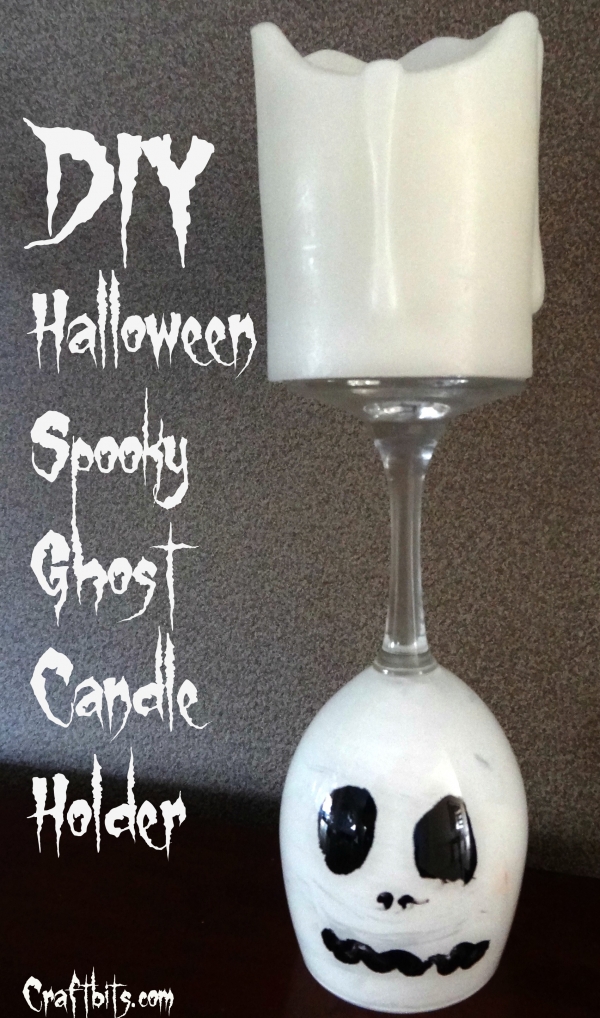
The ghost’s black facial features are painted on the inside of the bowl first. Once the face is completely dry, one or two coats of white acrylic paint are applied over it. When viewed through the outside of the glass, the face appears smooth and glossy.
Turn the finished glass upside down so the painted bowl becomes the ghost and the glass foot becomes a small platform for a lightweight flameless LED candle.
Get more details about this project
What you need
Wine glass with a broad, stable bowl
Black acrylic paint suitable for glass
White acrylic paint suitable for glass
Small detail paintbrush
Medium paintbrush or foam brush
Rubbing alcohol
Cotton pad or lint-free cloth
Paper towel or soft fabric for supporting the glass
Lightweight flameless LED candle
Clear craft sealer suitable for glass, optional
Removable adhesive dot, optional
Instructions
Upcycled wine-glass candle holders are an inexpensive way to decorate a Halloween table, mantel or party display. Turning the glass upside down creates a ready-made pedestal, while the rounded bowl provides the perfect surface for a funny or spooky ghost face.
Painting the design on the inside protects the visible face from scratches and leaves the outside of the glass smooth. The black features must be allowed to dry completely before the white background is added, or the colours may smear together.
For safety and stability, use a lightweight flameless LED candle rather than a wax candle. An upside-down wine glass was not designed as a traditional candleholder and may become top-heavy when supporting a large candle.
Instructions
Step 1: Select the wine glass
Choose a wine glass with a broad bowl and a flat, undamaged foot.
Avoid using a glass with chips, cracks or a loose-feeling stem. When turned upside down, the rim of the bowl should rest evenly on the table without rocking.
Test the weight and size of the flameless candle on the upturned foot before beginning. The candle should fit comfortably without overhanging excessively.
Step 2: Clean the glass
Wash the wine glass and dry it thoroughly.
Wipe the inside of the bowl with rubbing alcohol and a lint-free cloth to remove fingerprints, grease and detergent residue.
Allow the alcohol to evaporate completely before painting.
Step 3: Support the glass
Place the wine glass upright on your work surface.
Use a folded paper towel or soft fabric to stop it from sliding while you paint. Work in good lighting so you can check the design through the outside of the glass.
Step 4: Plan the ghost face
Decide where the front of the ghost will be.
The original face uses two large uneven black eyes, two tiny nostril dots and a wide wavy mouth. You can sketch the design on paper and hold it behind the glass as a guide.
Remember that you are painting on the inside, so lettering and asymmetrical details would need to be reversed.
Step 5: Paint the black eyes
Dip a small brush into black acrylic paint.
Paint two large oval or irregular eyes on the inside of the bowl. Slight differences between the eyes give the ghost a handmade, spooky expression.
View the face through the outside of the glass and adjust the shapes as necessary.
Step 6: Add the nose and mouth
Paint two small dots beneath the eyes to form the nose.
Add a wide black mouth below the nose. Create a wavy or scalloped line for the slightly crooked smile shown in the original decoration.
Avoid making the paint excessively thick. Several controlled brushstrokes will dry more evenly than one heavy application.
Step 7: Let the face dry
Leave the black facial features until they are completely dry.
Do not apply white paint while the black paint is still tacky. Brushing over wet black paint will smear it through the white background.
Follow the drying time supplied with your chosen glass paint. Drying may take longer when the paint is applied inside a curved bowl with limited airflow.
Step 8: Apply the first white coat
Use a clean medium brush or foam brush to cover the inside of the bowl with white acrylic paint.
Brush carefully over the back of the dried black face. Once the black has cured properly, it should remain visible through the outside of the glass.
Continue painting until the entire inside of the bowl is covered.
Step 9: Add a second white coat
Allow the first white layer to dry.
Hold the glass up to the light and look for thin or transparent areas. Apply a second coat if needed to create an opaque white ghost.
Do not paint the rim, stem or foot. Keeping those areas clear makes the upside-down wine-glass construction easy to recognise.
Step 10: Cure the paint
Let the finished paint dry and cure according to the paint manufacturer’s directions.
Acrylic paint may feel dry on the surface before it has fully hardened. Avoid turning the glass over or pressing against the painted interior too soon.
Apply a compatible clear craft sealer inside the bowl if you want a more permanent finish. Test product compatibility first because some sealers may cloud clear glass.
Step 11: Turn the glass upside down
Place the glass bowl-side down on a flat, stable surface.
The white-painted bowl should now resemble a ghost, with the transparent stem rising from the top.
Check that the glass does not wobble. If the rim is uneven or the holder feels unstable, use it without a candle as a decorative ghost.
Step 12: Add the flameless candle
Centre a lightweight flameless LED candle on the upturned glass foot.
Use a small removable adhesive dot beneath the candle if it needs additional stability. Do not use a large or heavy candle that could make the holder top-heavy.
Switch on the LED candle and display the ghost on a table, mantel or shelf.
Design Variations
Paint each wine glass with a different ghost expression.
Create a matching set with ghosts, jack-o’-lanterns and skull faces.
Use pale lavender, mint or soft grey instead of white for colourful ghosts.
Add a name to the base with a removable vinyl decal.
Place battery-operated fairy lights around a group of finished holders.
Safety and Care
Use only a lightweight flameless LED candle. Do not place a burning wax candle on the wine-glass foot.
Display the holder on a level surface away from the edge of tables, children, pets and high-traffic areas.
Do not lift or carry the holder by the stem while the candle is on top.
Once craft paint has been applied, reserve the glass for decorative use. Do not return it to food or drink service.
If the design is intended to be temporary, check the paint manufacturer’s removal directions. Do not assume every acrylic or glass paint can safely be removed in a dishwasher.
Wipe the outside gently with a soft cloth. Avoid soaking an unsealed design or using abrasive cleaners.




What do you think of this project? Let us know!