
Get more details about this project
What you need
A Good Cleaner
Use sugar soap, wood cleaner, or warm soapy water. This removes old dust, grime, grease, and mystery shed residue.
Sandpaper Or A Small Electric Sander
A mouse sander is handy for the tabletop and drawer fronts, but regular sandpaper works too.
Wood Stain Or Furniture Wax
This brings the timber back to life and gives the old table a warm, restored finish.
Use this to freshen the cast iron treadle base.
Old Rags And A Soft Brush
You will use these for dusting, wiping, cleaning, applying finish, and getting into all those fiddly little corners.
You may also want gloves, a drop cloth, and a dust mask. A basic mouse sander, sanding sheets, furniture wax, and protective gloves are useful supplies to keep on hand if you plan to do more small furniture upcycling projects. Amazon is handy for these basics, especially if your local hardware store somehow never has the grit of sandpaper you actually need.
Instructions
Old sewing machine tables are one of those pieces that can look absolutely hopeless at first glance. Dusty timber, rusty metal, stuck drawers, water marks, chipped varnish — the whole “rescued from the back of the shed” look.
But underneath all that grime, there is usually a beautiful little table waiting for a second chance.
This tutorial shows you how to upcycle an old sewing machine table using just five basic things. It is not a complicated museum-style restoration. It is a practical, beginner-friendly makeover for anyone who wants to clean up a vintage sewing table, refresh the wood, and bring that lovely cast iron treadle base back to life.
This project is especially good if you have an old Singer sewing machine table, a treadle sewing machine base, or a vintage sewing cabinet that no longer works as a sewing machine but still has plenty of charm as furniture.
If you enjoy rescuing old pieces, you might also like this CraftGossip roundup of clever ways to upcycle old sewing machine tables and parts for more ideas once you start looking at every rusty treadle base like it needs to come home with you. I know. It happens.
This simplified version is inspired by a dirty “before” style vintage Singer sewing machine table makeover , but it keeps the supply list short and the process very achievable.
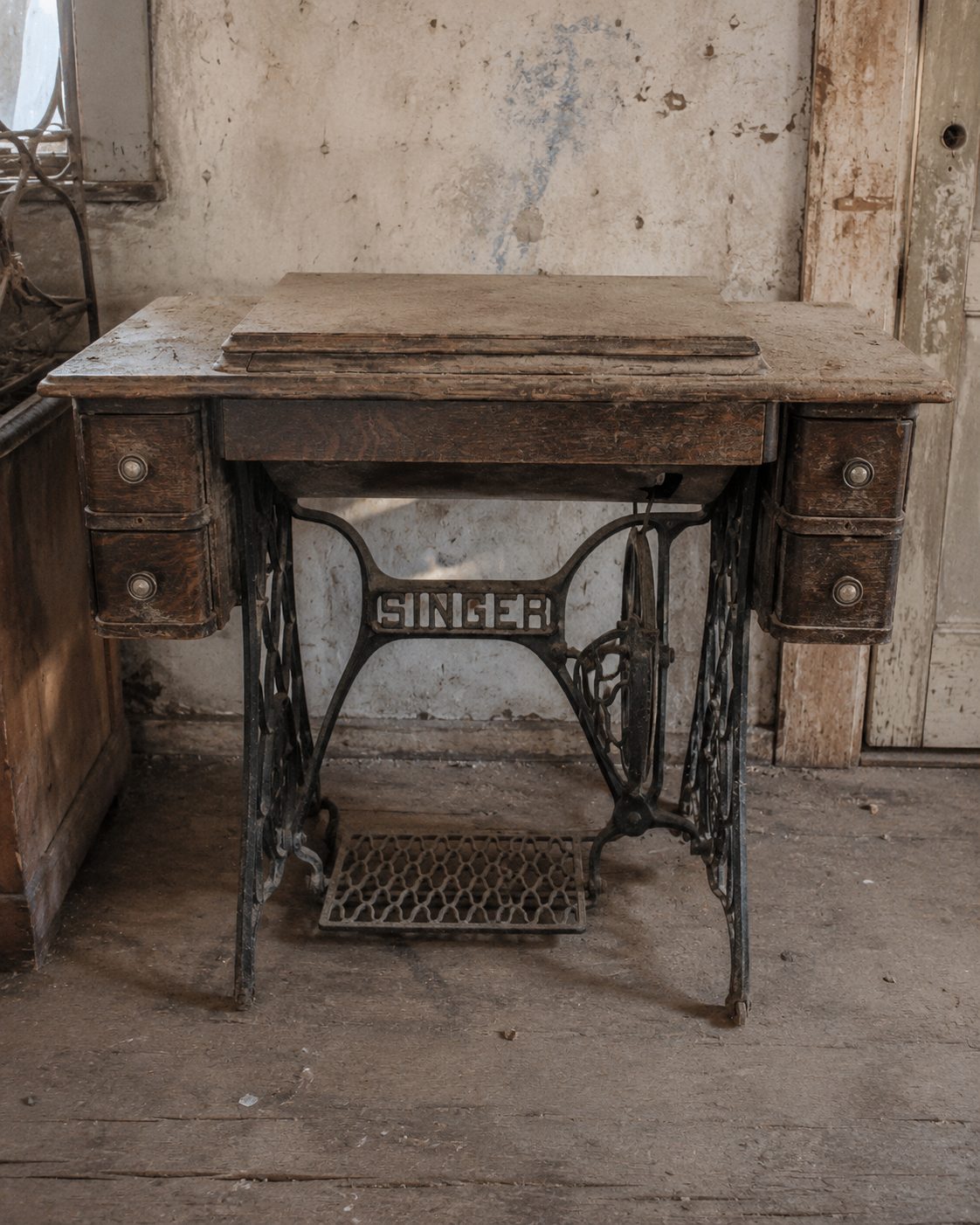
Step 1: Start With A Dry Clean
Before you get the table wet, remove as much loose dirt as possible.
Use a soft brush, old paintbrush, or vacuum brush attachment to clean:
- The tabletop
- Drawer fronts
- Inside the drawers
- Around the drawer runners
- The cast iron treadle base
- The foot pedal
- Underneath the table
Do not start with a wet cloth straight away. Old dust and dirt can turn into muddy streaks, and then you are just rubbing grime into the timber. Ask anyone who has cleaned old furniture in a hurry — it is not pretty.
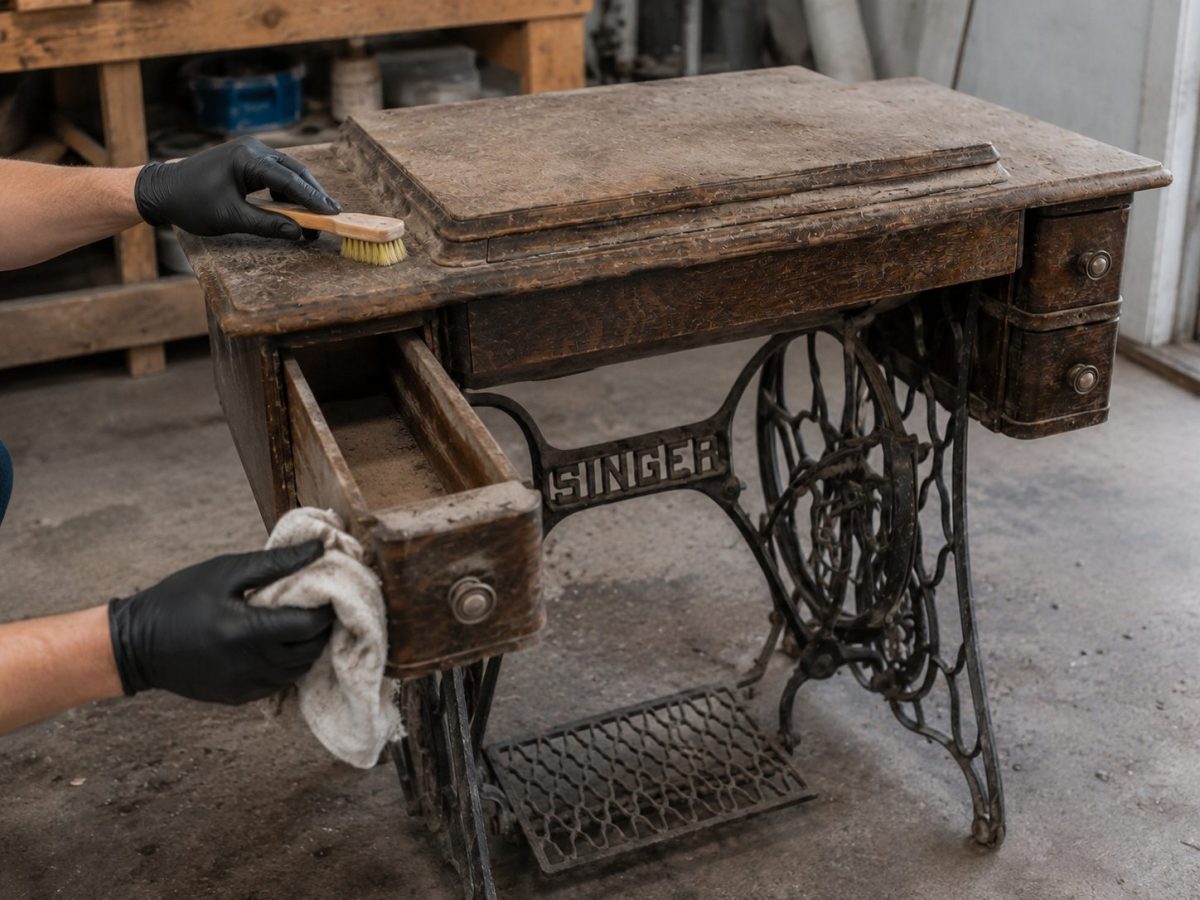
Step 2: Wash The Wood Gently
Mix a small amount of cleaner with warm water.
Dip a rag into the mixture, wring it out well, and wipe over the wooden parts of the sewing machine table.
The cloth should be damp, not dripping wet.
Old timber and veneer do not like being soaked. Too much water can cause swelling, lifting, bubbling, or warping, especially if the table has a thin veneer top.
Use a soft brush or toothbrush around the drawer edges, knobs, corners, and any decorative detail.
Wipe dry with a clean rag and let the table dry completely.
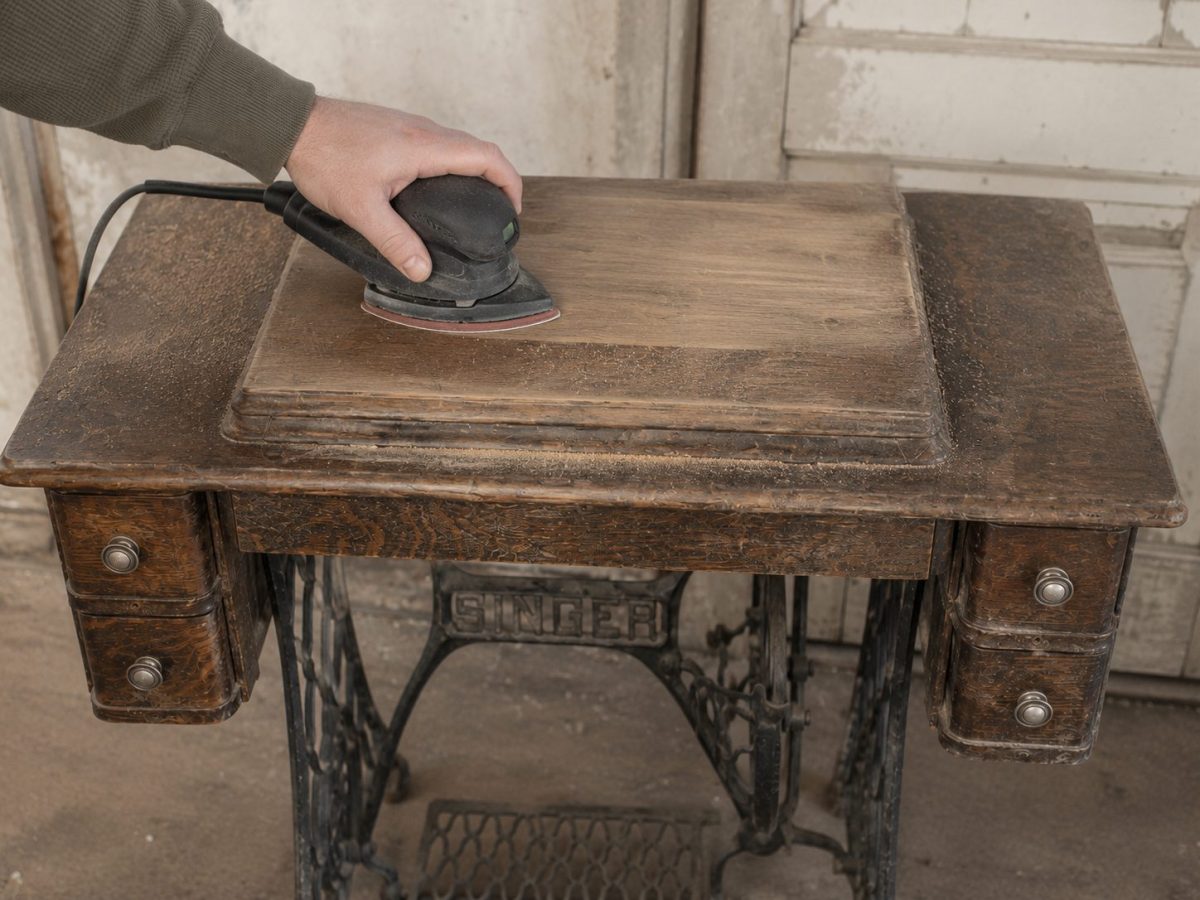
Step 3: Lightly Sand The Timber
Once the table is fully dry, sand the wooden top, drawer fronts, and rough edges.
You are not trying to erase every scratch. This is an upcycle, not a full factory reset.
The goal is to:
- Smooth rough patches
- Remove flaky old finish
- Even out scratchy areas
- Prepare the wood for stain or wax
Use medium grit sandpaper for rough areas, then finish with a finer grit for a smoother surface.
Always sand with the grain of the wood.
If the table has veneer, go gently. Veneer is thin, and it is painfully easy to sand through it if you get carried away. This is one of those times when “just one more pass” can become a regret.
Wipe away all sanding dust with a clean rag.
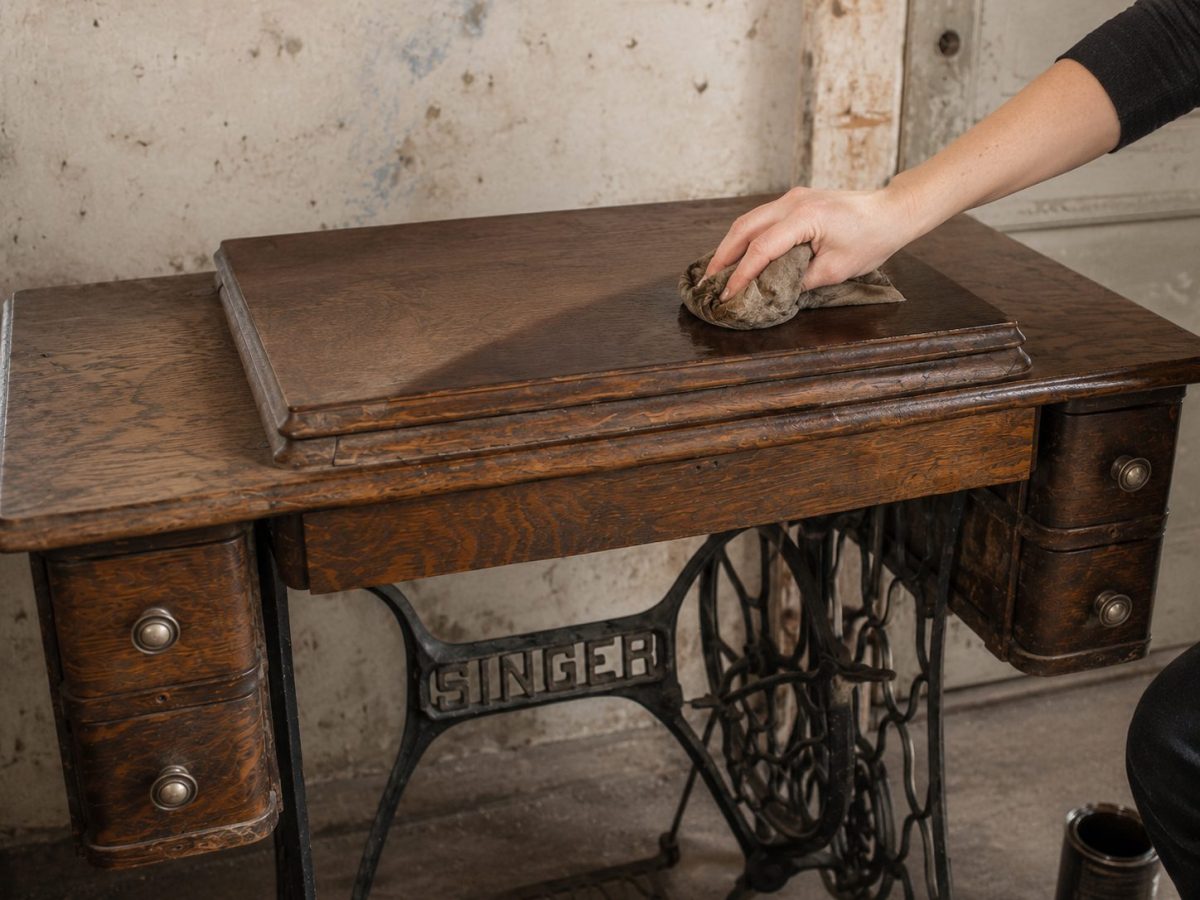
Step 4: Refresh The Wood With Stain Or Wax
Now the table starts looking loved again.
For a richer vintage look, apply wood stain with a rag, working in the direction of the grain. Let it sit for a few minutes, then wipe away the excess.
For a softer farmhouse finish, use furniture wax instead. Wax is lovely if you want the table to keep its aged character without looking overly shiny or newly bought.
Let the finish dry according to the product directions.
If the timber still looks dry or patchy, apply a second coat.
This is usually the point where you suddenly feel very clever and start mentally rearranging the hallway to make room for it.
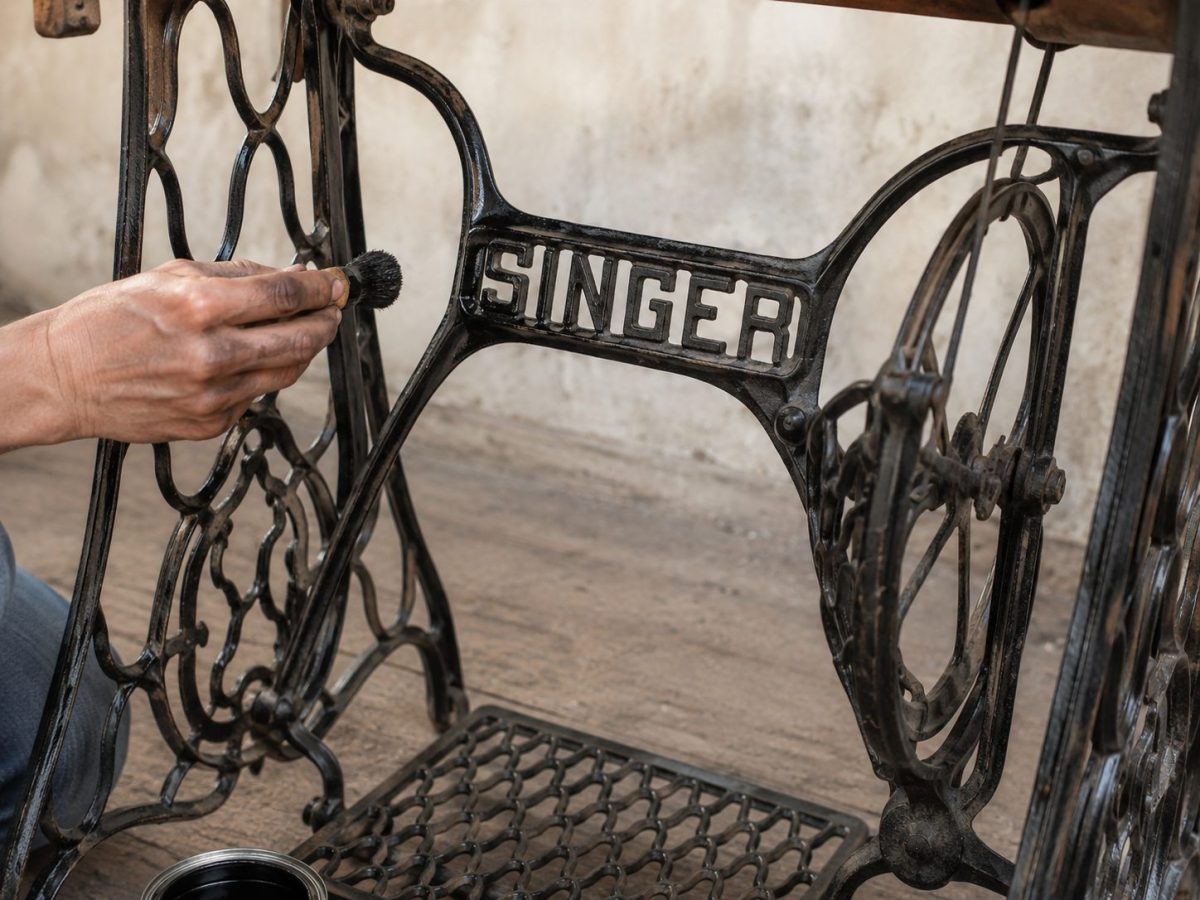
Step 5: Freshen The Cast Iron Base
The treadle base is the star of an old Singer sewing machine table, so it deserves a tidy-up too.
Brush away loose rust, dirt, and flaky bits from the metal base.
Then apply black metal paint or metal wax.
Use black metal paint if you want a cleaner, more finished look. Use metal wax if you want to keep more of the aged vintage feel.
A small brush helps you get into the decorative scrollwork and around the foot pedal.
If the Singer lettering is raised, you can lightly highlight it with a tiny amount of metallic wax once the black finish is dry. Do not overdo this part. A little detail is charming; too much can start looking like a craft project from 1997.
Let the metal dry completely before moving or styling the table.
Optional Step: Fix Sticky Drawers
If the drawers stick, rub a little candle wax along the drawer runners.
This simple trick helps old wooden drawers slide more smoothly without needing fancy hardware.
If the knobs are original, keep them if you can. Original hardware adds so much character to vintage sewing cabinets.
Styling Your Finished Sewing Machine Table
Once your table is clean, dry, and refreshed, it can be used in so many ways.
Try it as:
- A hallway table
- An entryway table
- A bedside table
- A sewing room display table
- A craft room feature
- A plant stand
- A cottage-style side table
- A vintage writing desk
For styling, add a small vase of flowers, a framed photo, a stack of old books, a table lamp, folded linen, or a woven basket underneath.
If you want to lean into the sewing theme, use vintage bobbins, old scissors, wooden spools, or a little sewing basket. Etsy is a lovely place to look for vintage sewing notions if you want that authentic old sewing-room look without raiding every drawer in your house.
Readers who enjoy sewing-room makes may also like browsing the CraftBits sewing projects and ideas section for more practical projects to pair with a refreshed sewing space.
Tips For Best Results
Test your cleaner, stain, wax, or paint on a hidden area first.
Do not soak the wood.
Sand lightly if the table has veneer.
Keep original knobs and hardware where possible.
Let each stage dry before moving on.
Do not aim for perfect. Old furniture looks best when it still has a little history showing.
Common Questions
Do I Have To Fully Strip The Old Finish?
No. For this simplified sewing machine table makeover, you do not need to fully strip the old finish unless it is badly peeling, sticky, or very uneven.
A good clean, light sand, and fresh wax or stain can make a huge difference.
Can I Paint The Wooden Cabinet Instead?
Yes. If the wood is badly damaged or not worth staining, paint is a good option.
Chalk paint, mineral paint, or furniture paint all work well. Just clean and lightly sand the surface first so the paint has something to grip.
Should I Remove The Sewing Machine?
If the machine is broken, missing parts, or too damaged to use, you can remove it and use the cabinet as a table.
If the machine still works or has sentimental value, think carefully before removing it. Some vintage machines are worth preserving.
Can I Use This Outdoors?
Only if the table is protected from weather. These old wooden cabinets and cast iron bases can suffer outside in rain and humidity.
If you want to use it on a covered porch, seal the wood well and use a suitable metal finish on the base.
What If The Base Is Very Rusty?
Use a wire brush or steel wool to remove loose rust first. If the rust is heavy, you may need a rust remover before painting or waxing.
For light surface rust, a good scrub and fresh black metal paint may be enough.
More Upcycling Ideas
Once you have restored one sewing machine table, it is very easy to start seeing potential in every old piece of furniture.
Old treadle bases can become console tables, plant stands, desks, craft tables, or display pieces. Drawers from broken sewing cabinets can be turned into wall shelves, organizers, or vintage storage boxes.
That is the lovely thing about upcycling. You are not just saving money or rescuing furniture from landfill. You are keeping a little piece of handmade history in use.
And honestly, there is something very satisfying about taking an old, dusty, forgotten sewing machine table and turning it into something you would proudly put in your hallway.





What do you think of this project? Let us know!