
Get more details about this project
What you need
Finished Size
Approx. 19″ in depth x 54″ across the widest edge.
Gauge
5½ stitches and 10 rows = 4″ in garter stitch with Homespun yarn. (Gauge is not super critical here, so relax!)
Supplies You’ll Need
About 1 skein of a chunky textured yarn (like Lion Brand Homespun or something similar you love).
About 1 skein of a furry/eyelash yarn for the accent stripes.
US 19 (15 mm) circular needles, 24″ or longer.
US 35 (19 mm) needles for the bind off.
Size K-10 (6.5 mm) crochet hook for the edging.
Tapestry needle for weaving in ends.
Instructions
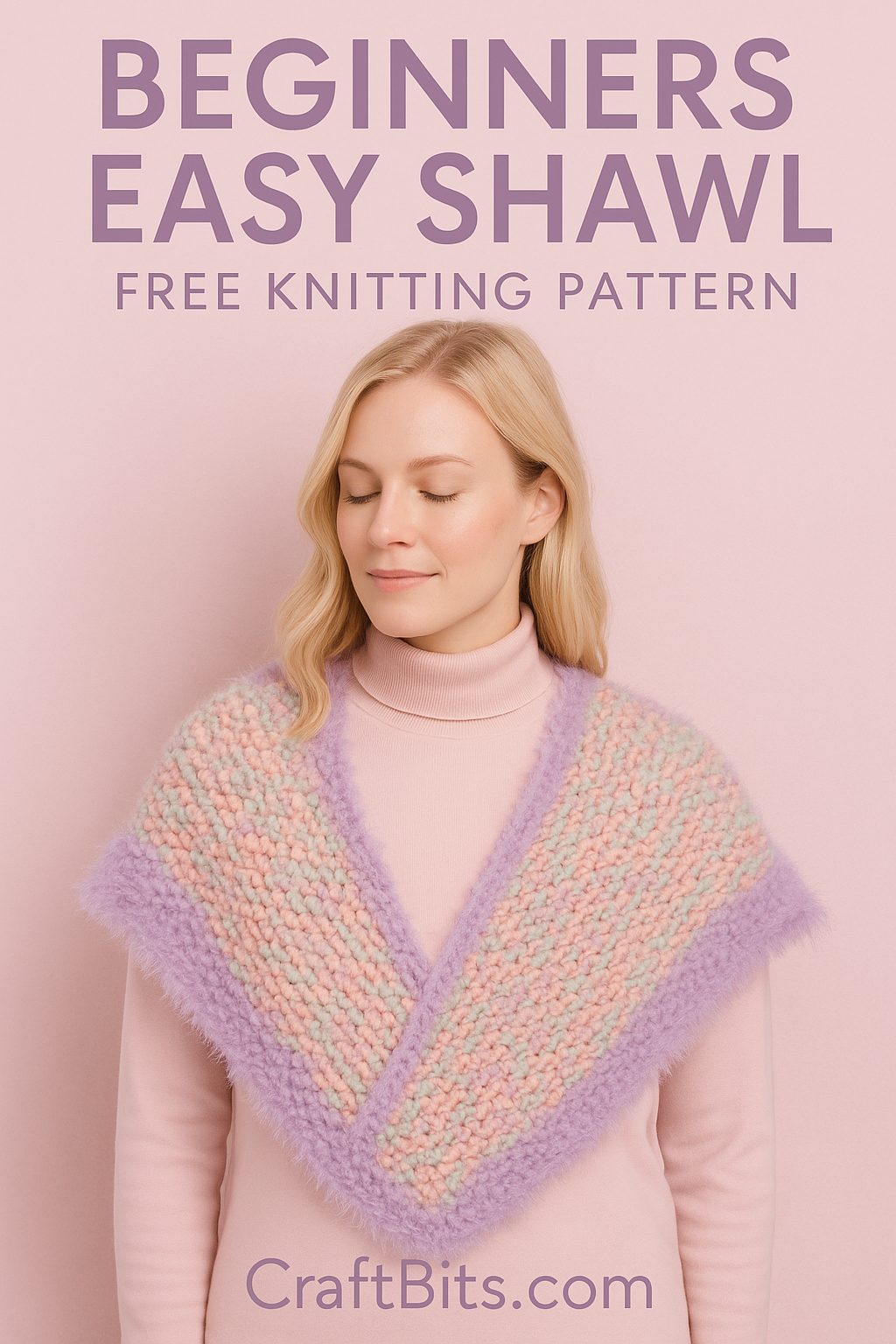
If you have been wanting to knit your first shawl but feel intimidated by lace charts and complicated shaping, this cozy triangle shawl is a lovely place to begin. It is worked mainly in garter stitch, which means you simply knit every row.
Chunky yarn and oversized needles create a soft fabric that grows quickly. Fluffy contrast stripes add a playful touch of texture without introducing a difficult stitch pattern. There is also an optional single-crochet border, making this a gentle introduction to combining knitting and crochet.
This is a flexible pattern that can easily be made larger or smaller. Continue knitting until the shawl reaches your preferred size, but remember to reserve enough yarn for binding off and adding the optional border.
Special Stitch
Knit Front and Back – Kfb
Knit into the front of the next stitch without removing it from the left needle. Knit into the back of the same stitch, then slide the original stitch from the needle.
One new stitch has been created.
Knitting Instructions
Begin the Shawl
Using the US 19 (15 mm) circular needle and the main yarn, cast on 20 stitches.
Rows 1–8: Knit across until one stitch remains. Kfb in the final stitch.
You will increase by one stitch on every row.
Stitch count after Row 8: 28 stitches
First Fluffy Stripe
Hold one strand of the main yarn and one strand of the furry contrast yarn together.
Rows 9–10: Knit across until one stitch remains. Kfb in the final stitch.
Stitch count after Row 10: 30 stitches
Second Main-Yarn Section
Drop the furry contrast yarn and continue with the main yarn only.
Rows 11–18: Knit across until one stitch remains. Kfb in the final stitch.
Stitch count after Row 18: 38 stitches
Second Fluffy Stripe
Hold one strand of the main yarn and one strand of the furry contrast yarn together.
Rows 19–20: Knit across until one stitch remains. Kfb in the final stitch.
Stitch count after Row 20: 40 stitches
Third Main-Yarn Section
Drop the furry contrast yarn and continue with the main yarn only.
Rows 21–28: Knit across until one stitch remains. Kfb in the final stitch.
Stitch count after Row 28: 48 stitches
Third Fluffy Stripe
Hold one strand of the main yarn and one strand of the furry contrast yarn together.
Rows 29–30: Knit across until one stitch remains. Kfb in the final stitch.
Stitch count after Row 30: 50 stitches
Widen the Triangle
Drop the furry contrast yarn and continue with the main yarn.
From this point, increase at both ends of every row.
Every following row: Kfb in the first stitch, knit across until one stitch remains, then kfb in the final stitch.
Each completed row adds two stitches.
Continue working in this manner until the shawl measures approximately 19 inches deep and 54 inches across its widest edge, or until it reaches your preferred size.
If desired, add further two-row contrast stripes as the shawl grows.
Bind Off
Change to the US 35 (19 mm) needles.
Bind off all stitches loosely in knit.
Using larger needles for the bind-off helps prevent the finished edge from becoming tight or puckered.
Cut the yarn, leaving a tail long enough to weave in securely.
Optional Crochet Border
Using the furry contrast yarn and the 6.5 mm crochet hook, join the yarn at one corner of the shawl.
Work one round of single crochet evenly around the entire outer edge.
Place additional single crochet stitches at the corners as needed so the border follows the shawl’s shape without pulling or curling.
Join with a slip stitch, fasten off and weave in the remaining yarn tail.
Finishing
Weave all yarn ends securely into the wrong side of the shawl.
Gently block the shawl to even out the garter-stitch fabric and improve its triangular shape. Avoid stretching furry or eyelash-style yarn too aggressively.
Allow the shawl to dry completely before wearing or storing it.
Pattern Tips
- Place a removable stitch marker on the side where the single increases are made during the opening section.
- Do not worry if the furry yarn makes the stitches difficult to see. Feel for each stitch with your fingers as you knit.
- A circular needle is recommended because it provides enough room for the growing number of stitches.
- For a larger shawl, continue the final increase section for additional rows.
- For a simpler shawl, omit the furry yarn and work the entire project in one chunky yarn.
- For a more modern finish, substitute the eyelash yarn with a coordinating brushed alpaca or mohair-style yarn.
- Keep the bind-off very loose so the upper edge can drape comfortably around the shoulders.
This soft triangle shawl is quick, forgiving and wonderfully adaptable. Wear it draped over your shoulders, fasten it at the front with a shawl pin or wrap it around your neck as a generously sized scarf.



What do you think of this project? Let us know!