
It is beginner-friendly, budget-friendly, and a lovely way to use collected sea glass from beach walks. No beach nearby? No problem. You can use craft store sea glass, tumbled glass gems, mosaic glass pieces, or even recycled broken glass that has been safely smoothed.
This project works beautifully for small succulents, cactus cuttings, windowsill herbs, patio plants, or as a handmade gift for someone who loves beach decor. It is also a nice summer craft, coastal wedding table idea, or craft group project.
If you enjoy coastal DIY decor, you might also like the CraftBits Dollar Tree Beach Shell Nautical Planter for another easy beach-themed planter idea, or browse the recycled crafts section for more ways to turn simple supplies into something useful and pretty.
Get more details about this project
What you need
Terracotta pot with drainage hole
Sea glass, tumbled glass, or smooth mosaic glass pieces
Tile adhesive, mosaic adhesive, or premixed tile mastic
White tile grout or premixed mosaic grout
Small spatula, palette knife, or craft stick
Sponge
Old cloth or paper towel
Disposable gloves
Bowl of clean water
Painter’s tape, optional
Clear outdoor sealer, optional
Succulent potting mix
Coral-style succulent or small plant
Small decorative pebbles or gravel
If you are buying supplies online, look for tumbled sea glass, white mosaic grout, tile adhesive, mosaic tools, and succulent potting mix. Amazon is usually handy for the practical bits like grout, gloves, and craft spatulas, while Etsy can be a nice place to find prettier sea glass mixes if you want soft coastal colours rather than standard craft-store glass.
Instructions
This DIY sea glass mosaic planter is a lovely way to turn a basic terracotta pot into a coastal-style plant pot that looks like something you would find in a little seaside boutique.
Using tile adhesive and grout, the sea glass pieces are set onto the pot like tiny mosaic tiles, then grouted to create a smooth, finished surface. The result is polished, textural, and beautifully beachy without needing expensive supplies.
This is a great beginner mosaic project because the surface is small, the shapes do not need to be perfect, and sea glass already has that soft, organic look. If your lines are slightly uneven, it still looks intentional. Honestly, that is one of the joys of coastal crafts — nature already did half the styling work for us.
Add a coral-style succulent, such as a coral cactus, pencil cactus, rhipsalis, or “Gollum” jade, and the finished planter looks like a tiny reef in a pot.
Choosing the Right Pot
A terracotta pot works beautifully because it is sturdy, inexpensive, and easy to find. Choose a pot with a drainage hole if you are planting directly into it.
For a first attempt, start with a medium pot rather than a tiny one. Small pots can be fiddly because the curve is tighter, while larger pots take longer to cover. Something around 10–15 cm wide is a nice beginner size.
If your pot is very porous or dusty, wipe it clean and let it dry completely before you begin.
Instructions
1. Clean and Dry the Pot
Wipe the outside of the terracotta pot with a dry cloth to remove dust and loose particles.
If the pot has dirt or sticker residue on it, wash it first and allow it to dry completely. Do not rush this step. Adhesive grips much better to a clean, dry surface.
2. Plan Your Sea Glass Design
Before you start attaching the glass, spread your sea glass pieces out on the table.
Sort them into colours and sizes. This makes the mosaic process much easier, especially when you need small pieces to fill little gaps around the rim or base.
You can create a random beach-glass mosaic, a pale aqua and white coastal look, a blue ombre sea glass planter, horizontal colour bands, a scattered “washed ashore” design, or a more formal tile-style pattern.
For a natural coastal look, I prefer a random layout. It is more forgiving and feels more like genuine beach glass.
3. Apply Tile Adhesive in Small Sections
Using a small spatula, craft stick, or palette knife, spread a thin layer of tile adhesive onto a small section of the pot.
Do not cover the whole pot at once. Tile adhesive can start to skin over before you have placed all your glass, and working in small sections gives you much more control.
A layer around 2–3 mm thick is usually enough. You want the glass to sit securely in the adhesive, but not sink so deeply that the pieces disappear.
4. Press the Sea Glass Into the Adhesive
Press each sea glass piece gently into the adhesive. Leave a small gap between each piece so the grout has space to settle.
Try not to push the pieces all the way down to the pot surface. You want them embedded firmly but still raised enough to show off the frosted glass texture.
Work your way around the pot, adding adhesive and glass section by section.
Keep an eye on the balance of colour as you go. If you put all the blue pieces on one side, the planter can look a little lopsided. Unless that is your plan, in which case we shall call it “artistic flow.”
5. Fill Small Gaps
Use smaller sea glass pieces to fill gaps around larger pieces.
If you have awkward spaces, you can leave them for the grout to fill, but try not to leave very large empty areas. The closer the glass pieces sit together, the more polished the mosaic will look.
Around the rim and base, use flatter or smaller pieces so they follow the curve of the pot more easily.
6. Let the Adhesive Dry
Allow the adhesive to dry completely according to the product instructions.
This may take several hours or overnight, depending on the adhesive you use. Do not grout too soon. If the glass pieces are still shifting, the grout stage will become messy very quickly.
Once dry, gently test a few pieces with your finger. They should feel firmly attached.
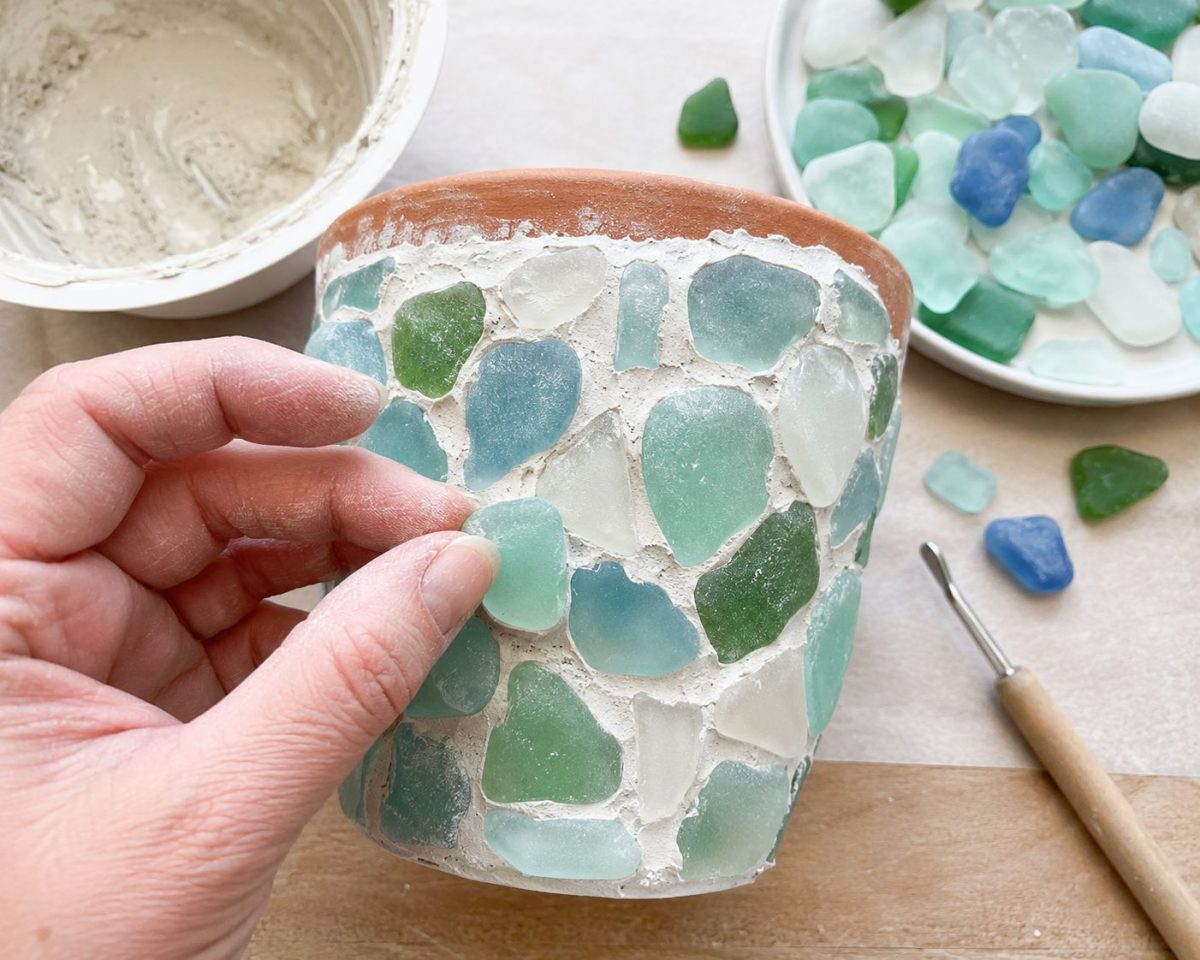
7. Mix or Prepare the Grout
Prepare your tile grout according to the packet instructions. White grout gives the planter a fresh beachy look and makes aqua, blue, and green glass colours pop beautifully.
Premixed grout is easiest for beginners because you do not need to worry about getting the water ratio right.
Wear gloves for this part, especially if you have sensitive skin.
8. Apply the Grout
Using your gloved fingers, a grout float, sponge, or craft spatula, spread grout over the sea glass mosaic.
Push the grout into all the gaps between the glass pieces. Do not worry if the glass gets covered at this stage — it will look messy before it looks lovely. Most good craft projects have that “oh no, what have I done?” moment somewhere in the middle.
Work the grout into the spaces until the surface feels evenly filled.
9. Wipe Away Excess Grout
Let the grout sit for a few minutes, then gently wipe away the excess with a damp sponge.
Rinse the sponge often and keep wiping until the sea glass pieces begin to show clearly again. Be careful not to dig too much grout out from between the pieces.
After the planter has dried a little more, polish the glass with a soft cloth to remove any remaining grout haze.
10. Let the Planter Cure
Allow the grout to cure fully according to the product instructions. This may take 24–48 hours.
Avoid planting, watering, or sealing the pot before the grout has properly set.
11. Seal the Mosaic, Optional
If the planter will be used outdoors, apply a suitable grout sealer or outdoor clear sealer once the grout has cured.
This helps protect the grout from moisture and dirt, especially if the planter will sit on a patio, balcony, or garden table.
If the planter is purely decorative and kept indoors, sealing is optional, but it can still help keep the surface easier to clean.
12. Add Your Succulent
Fill the pot with succulent potting mix and add your chosen plant.
For the prettiest coastal effect, choose a succulent that looks a little like coral, seaweed, or sea urchins. Top the soil with white pebbles, small gravel, crushed shell, or decorative stones to finish the beachy look.
Succulents That Look Like Coral
To really make this sea glass mosaic planter feel coastal, choose a succulent with branching, wavy, tubular, or sculptural growth.
Good coral-style succulents include:
- Pencil Cactus / Firesticks — Euphorbia tirucalli
- Coral Cactus — Euphorbia lactea ‘Cristata’
- Rhipsalis
- Crassula ovata ‘Gollum’ or ‘Hobbit Jade’
- Euphorbia flanaganii — Medusa’s Head
- Sedum rubrotinctum — Jelly Bean Plant
- Blue Chalk Sticks — Senecio mandraliscae
- Haworthia
- Echeveria ‘Topsy Turvy’
- Small aloe varieties with coral or orange tones
Safety note: Some Euphorbia varieties, including pencil cactus and coral cactus, have a milky sap that can irritate skin and eyes. Wear gloves when handling them and keep them away from pets and young children.
Tips for a Better Mosaic Finish
Use flatter pieces of sea glass where possible. Very rounded pieces can be harder to grout neatly.
Do not make the adhesive layer too thick. If it squishes up between the glass pieces, the grout will have less space to sit.
Keep a damp cloth nearby while you work. Tile adhesive and grout are much easier to clean before they dry.
Use white grout for a fresh coastal look. Grey grout gives a more rustic stone effect, while pale sand-coloured grout can look soft and natural.
Work slowly around the rim. This is the part people tend to rush, but a neat rim makes the whole planter look more professional.
Do not plant until everything is fully cured. Moisture too soon can weaken the finish.
Indoor and Outdoor Notes
For indoor use, standard mosaic adhesive and grout will usually be fine.
For outdoor use, choose waterproof tile adhesive, exterior grout, and a suitable grout sealer. Place the planter in a sheltered area if possible, especially if you live somewhere with heavy rain, frost, or intense sun.
If you want the planter to last for years outside, treat it more like a proper outdoor mosaic project rather than a quick craft.
Project Variations
Make a set of three pots in different sizes for a coastal windowsill display.
Use only white and clear sea glass for a soft wedding or beach-house look.
Create an ombre planter with dark blue glass at the base fading into pale aqua near the top.
Use broken ceramic tiles mixed with sea glass for a Mediterranean mosaic look.
Add tiny shell pieces between the sea glass for extra beach texture.
Make mini versions as handmade gifts for teachers, neighbours, or plant-loving friends.
Use a faux succulent if you want a zero-maintenance version for a bathroom shelf or holiday rental.
Troubleshooting
My sea glass pieces are sliding.
You may be using too much adhesive, or the adhesive may be too wet. Work in small sections and use a thicker mosaic or tile adhesive rather than runny glue.
The grout is covering the glass.
That is normal during the grouting stage. Let it sit briefly, then wipe gently with a damp sponge until the glass shows again. Polish with a dry cloth once the grout haze appears.
The grout is cracking.
Cracking can happen if the grout is too thin, dries too quickly, or is applied over large uneven gaps. Make sure the grout is mixed correctly and pushed firmly between the glass pieces.
The pot feels too heavy.
Sea glass and grout add weight. For larger planters, consider decorating only the upper half or creating a band of mosaic around the middle instead of covering the entire pot.
Can I use hot glue instead of tile adhesive?
Hot glue is not recommended for this project. It can soften, loosen, or peel away, especially if the pot is outdoors or in a sunny window. Tile adhesive gives a much stronger mosaic finish.
Can I use broken glass?
Only use glass pieces that are smooth and safe to handle. Sharp broken glass is not suitable unless it has been professionally tumbled or sanded.
Why This Grout Method Works So Well
Tile adhesive and grout create a proper mosaic-style finish that feels sturdy, polished, and more like a decorative home decor piece than a quick craft project.
This method is:
- Durable
- Polished
- Better for patio display
- Easier to clean
- Ideal for a real mosaic look
- Perfect for sea glass, tile pieces, and smooth glass gems
It does take a little drying time, but the finished sea glass planter looks beautiful enough to give as a handmade gift.



What do you think of this project? Let us know!